



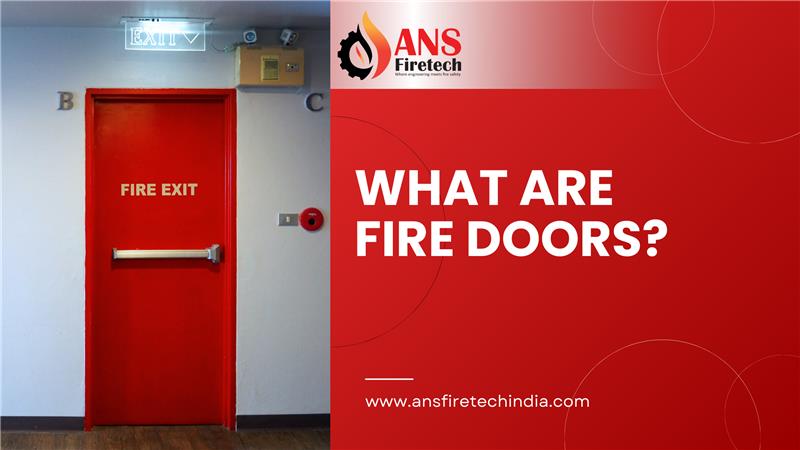
Fire doors are essential for safeguarding people and property in today’s environment, where fire safety is a major concern for both residential and business areas. More than just ordinary barriers, these speciality doors are painstakingly crafted using state-of-the-art sealing technology and fire-resistant materials to help prevent the spread of fire and smoke..
What Are Fire Doors?
A fire door is a specially made safety device that is intended to keep harmful smoke and flames from spreading for a predetermined amount of time, usually 30, 60, 90, or 120 minutes. Fire doors are made with reinforced frames that can tolerate high temperatures, intumescent seals, and fire-rated cores, in contrast to conventional wooden or metal doors..
The Science Behind Fire Doors
Fire doors are engineered with a deep understanding of fire dynamics and material science. Here’s how they work:
- Fire-Resistant Materials – Most fire doors use materials like gypsum, steel, glass, or solid timber combined with fire-retardant layers to resist high temperatures.
- Intumescent Seals – These seals expand when exposed to heat, filling gaps around the door and preventing smoke and flames from seeping through.
- Self-Closing Mechanism – Closers installed on fire doors guarantee that the door will automatically close, providing a strong barrier in the event of an emergency.
- Compartmentalization – By dividing buildings into fire-safe sections, fire doors slow down the spread of fire, giving occupants more time to evacuate.
Types of Fire Doors
Fire doors come in different forms depending on where they are used and how long they can resist fire. Some common types include:
- FD30, FD60, FD90, FD120 – Fire doors designed to resist fire for 30, 60, 90, or 120 minutes.
- Timber, Steel, Glass, and Composite Fire Doors – Different materials for different applications.
- Single or Double Fire Doors – Depending on the width of the opening.
- Glazed Fire Doors – With fire-rated glass for visibility and safety.
- Emergency Exit Fire Doors – Equipped with push bars for quick evacuation.
Why Fire Doors Are Important
- Life Safety: They provide a vital escape route during emergencies.
- Property Protection: By containing fire, they reduce damage and financial loss.
- Regulatory Compliance: Most safety standards and building codes mandate fire doors in workplaces, hospitals, schools, and high-rise buildings.
- Insurance Benefits: Compliance with fire safety measures, including fire doors, can lower insurance risks and costs.
Latest Innovations in Fire Door Engineering
With advancements in fire engineering and safety technology, modern fire doors now include:
- Smart Sensors that detect fire and ensure automatic closure.
- Glass Fire Doors for visibility without compromising safety.
- Eco-Friendly Materials that meet sustainability goals while ensuring protection.
Conclusion
Fire doors are more than just safety equipment; they are a scientific solution created to save lives and property. Whether you are in charge of a residential building, corporate complex, or industrial site, it is imperative that fire doors are erected and maintained on a regular basis.
Businesses and homeowners can take proactive measures towards safer settings by being aware of the science underlying fire doors, the various varieties that are available, and their critical role in fire containment.
Ready to strengthen your fire safety measures?
Protect your people, property, and peace of mind with expert fire door solutions.